
The War Ended Twice for this PoW.
Updated: Aug 18

I met Cyril Gilbert only twice, once at Hellfire Pass in Kanchanaburi, Thailand, and once in the shadow of Changi Prison, over a few beers that went on far longer than either of us planned. He was well into his eighties by then, and he had that thing you find in a handful of old POWs and almost nobody else — an intense energy, a positivity, that made no sense given what he'd survived. I remember thinking: how does a man come through that and still light up any room he walks into?

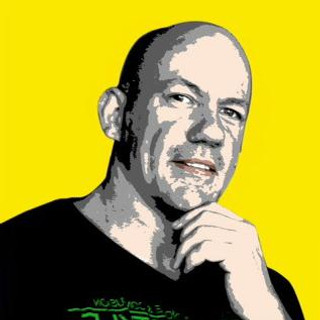
I got my answer decades later, from an unexpected source. I’d written a story about former Lance Sergeant Cyril Gilbert, 2 Company, Australian Army Service Corps, 27th Brigade, 8th Division AIF, for a local newspaper. His son Ross opened the paper, taken aback to see his late father beaming out of the pages at him. Ross had been working through his own memories of a father who never really put the war down.
His father served in Singapore until the fall of Singapore, then was a POW in Changi, ending up in the F Force Railway party in the torrid uppermost reaches of the Thai-Burma border.
“Being his son, I saw that positive has come out of a lot of negativity," Ross told me. Cyril had informed him once, flatly, that those bastards were not going to get him like they got the others. It was more hatred than survival instinct that got him through, where thousands of his fellows perished in the foetid mud. It was hate — specific, personal, load-bearing hate — and Cyril carried it in his kitbag when he returned home to Queensland.

Three and a half years as a POW. Seventy more years living with it. That's how the maths actually worked out in his father's life. Cyril's freedom in 1945 was only ever partial. The rest of it he had to buy back himself, one RSL fundraiser, one Girl in a Million campaign, one Ex-POW Association meeting at a time, and he never quite worked the balance down to zero.
What struck me talking to Ross wasn't the drama — it was the discipline. Cyril didn't drink a drop before the war. Teetotaller, by all accounts, sitting with his best mate at Singapore dances sipping lemonade while everyone else got stuck into it. That mate didn't come home; he died on the death march out of Sandakan. Cyril made up for the lemonade when he got back -- “two years of wine, women and song ... and I never sang a note!” he told me -- and nobody who knew what he'd lost begrudged him a single round of it.
The stories he told often, he told happily — about bandmates, canteens, mates' faces. The stories that mattered more, he mentioned once and never again. Like being tied to a log on a work patrol, waiting to find out whether the guards were going to take his head or his hands, because he'd stood up for sick men who couldn't march. An imposing six-foot-two sergeant, he was made to bend at the knees so a much shorter Japanese guard could reach his face to slap it. Ross remembers the look that came over his father when that one surfaced.
Here's where the war books I write and Ross's story properly meet. Cyril needed the hate. “He seemed to have to hold onto that hate for the memory of his mates that died,” explains Ross. Letting go of it would have felt like letting them go. That's a kind of duty, self-imposed and unrelenting, and it's the engine that ran the RSL work, the Ex-POW Association, the university grants funded out of a canteen trust that would otherwise have handed every survivor about twenty dollars and called it square. Cyril wanted to live to a hundred. He made ninety-four. And was still the the National and Queensland President of the Ex-Prisoner of War Association at that age.
Ross was there when his father finally died at ninety-four. He turned to his sister and said, "The war is finally over."
Ross thinks he was trying to outlast the forgetting. Ross’s sister worked for the Queensland RSL for several years, too. And then there's Ross himself. Raised inside all of that, and landing somewhere completely different. He stopped marching on Anzac Day after his father died. He calls himself a pacifist, though the word still doesn't sit easily in his mouth. Ross never told his dad that his son was dating a Japanese girl at university — not out of shame, just a quiet calculation that it would have disappointed a man who, decades on, still saw the Courier-Mail run his cranky face on the front page over land being bought by Japanese at Yeppoon in Queensland. He was, Ross says plainly, a good fella. He was also, in the same breath, a man who never fully separated the uniform from the country, or the war from the peace that followed it.
Ross and I watched the new POW documentary 'Under a Bamboo Sky' (now on Netflix Australia) together. "I didn't think I'd get emotional," says Ross, clearly moved by seeing his father's face on screen, and hearing his voice.

I don't think Ross's pacifism is a rejection of his father. It's what freedom looks like when you're one generation removed from having to fight for it. Cyril's peace was hard-won and permanently provisional, guarded by hate because hate was the only thing strong enough to hold the memory of his mates in place. Ross's peace is unguarded. He gets to have it precisely because his father spent everything he had making sure the account was settled.
Two men, one blood line, two entirely different ideas of what surrender actually costs — and what, if anything, you're allowed to do with your freedom once it's finally yours.
I think about that difference a lot when I'm writing about VJ Day in 1945 and the men and women who never got the chance to work any of it out at all.

If this raises questions for you about what surrender, freedom and peace really mean — for the men who lived it, and for the generations after them — I've put together a free companion PDF, ‘The Bleedin’ War’s Over -- Reflections on Surrender'. Grab it here: stuartlloyd.net/vjday1945


Comments